

Month: November 2026

AI illustration of geometric shadows on a city street

Making a City Notebook With Words and Small Sketches

A city notebook can hold impressions that a photograph alone would miss. A rough drawing records the arrangement of a corner, while a few words preserve why you paused there. The two forms do not need to repeat each other.

Choose a comfortable stopping place and sketch only the main lines of the scene. Mark a doorway, a change in pavement or the edge of a shadow. Leave detail out deliberately so the page remains quick enough to make during an ordinary walk.

AI illustration of geometric shadows on a city street
AI-generated editorial illustration.

Add a short description of the atmosphere and your viewpoint. Distinguish direct observation from interpretation, especially when writing about unfamiliar places. There is room for uncertainty in a useful notebook.

Later, choose one entry to develop into a longer piece. Keep the original page beside it so the writing remains connected to the initial observation. A modest record made with care can provide a stronger starting point than a more dramatic story reconstructed from memory.
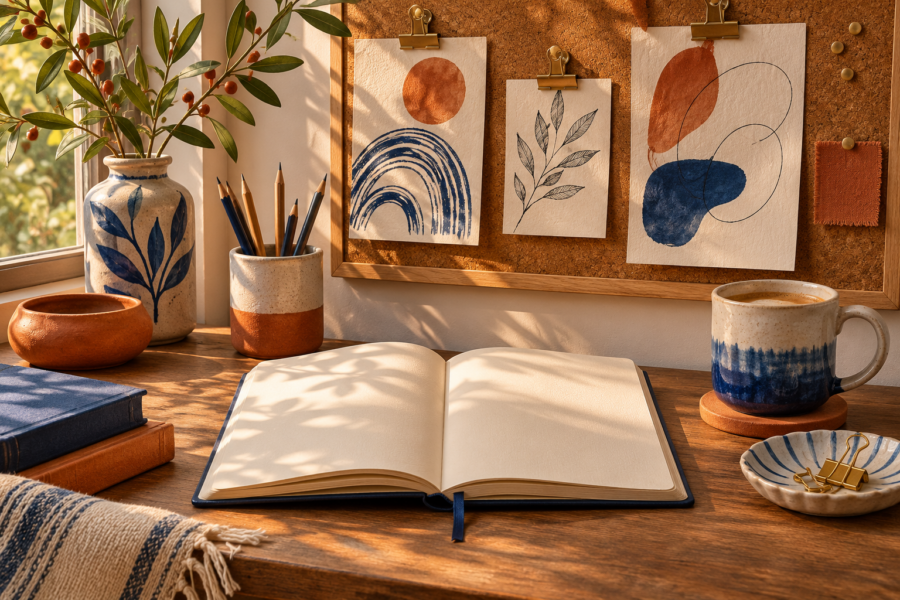
AI illustration of a quiet creative workspace

Leaving Useful Notes for the Next Work Session

The final few minutes of a creative session can make the next one easier to begin. Instead of ending with a vague intention to continue, leave a short note describing the current state of the work and one clear next step.

Record the decision you made most recently and why it matters. Save unresolved alternatives without forcing a rushed choice. A screenshot, a rough sketch or a named version can provide enough context to recover the thread later.

AI illustration of a quiet creative workspace
AI-generated editorial illustration.

Keep the next action small and observable. Compare two headings, check a caption beside its image or arrange the opening spread. A concrete task is easier to begin than an instruction to improve the entire project.

At the next session, read the note before making changes. You may choose a different direction, but the earlier reasoning remains available. This habit gives continuity to work that happens in short intervals and prevents useful questions from disappearing between sessions.

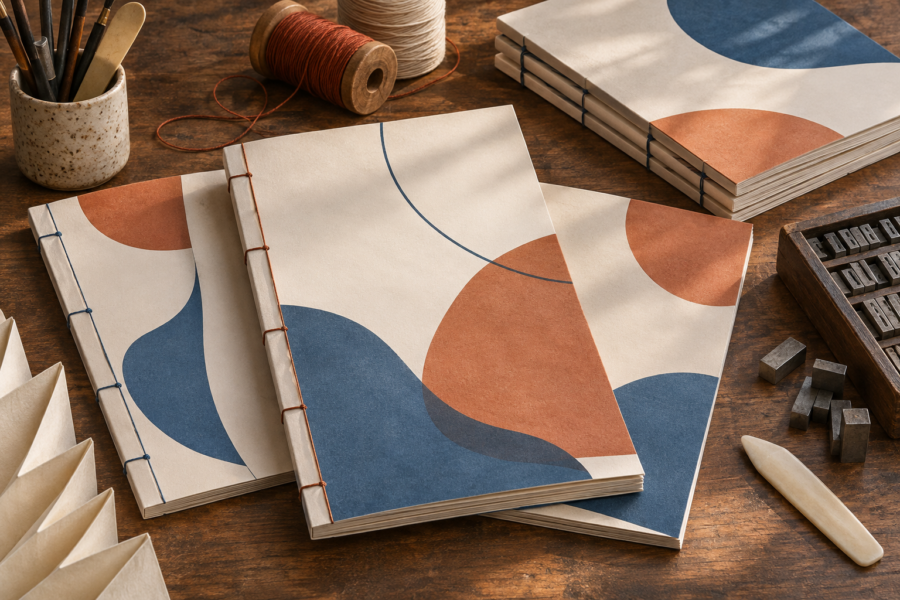
AI illustration of hand-bound publications with abstract covers

Making a Paper Dummy Before Refining a Layout

A paper dummy is a simple folded model of a publication. It does not need finished artwork to be useful. Blank sheets with rough labels can help you think about sequence, page turns and the overall scope of a small project.

Begin with the smallest version that can communicate your idea. Place short notes where the opening, main sections and closing pages might sit. Turn through the model as a reader would, rather than considering every page as an independent composition.

AI illustration of hand-bound publications with abstract covers
AI-generated editorial illustration.

Look for moments that feel abrupt or repetitive. Move a section, reduce an opening or leave a quieter spread between two dense passages. These changes are easier to discuss when everyone can handle the same modest physical model.

Keep the dummy after the digital layout develops. It records the early structure and provides a useful comparison when the project becomes more detailed. The model is a working question about the publication, not a promise that every page must remain fixed.

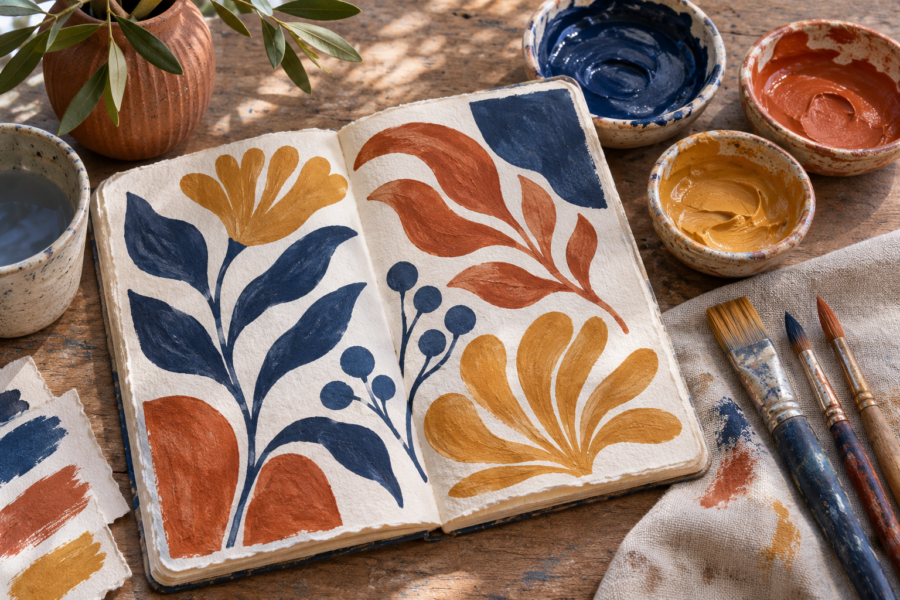
AI illustration of a painted botanical sketchbook and brushes

Keeping the Rough Drawing Beside the Finished Work

A polished illustration often conceals the decisions that shaped it. Keeping an early rough drawing beside the final version makes those choices easier to examine. The pair can tell a more useful story than either image alone.

Select a rough that shows a meaningful stage rather than simply the least tidy page. Perhaps it contains a different arrangement, a stronger gesture or an idea that was later reduced. Explain the role it played in a few plain sentences.

AI illustration of a painted botanical sketchbook and brushes
AI-generated editorial illustration.

Compare the versions with a specific question. Did simplification improve the focal point? Did a quieter background help the main shape? Keeping the question narrow prevents the review from becoming a vague judgement of which image looks nicer.

Treat the rough as part of the work rather than an embarrassment to hide. It can preserve an energy worth recovering in the next project. A small archive of these comparisons gradually becomes a personal guide to the choices you tend to make.

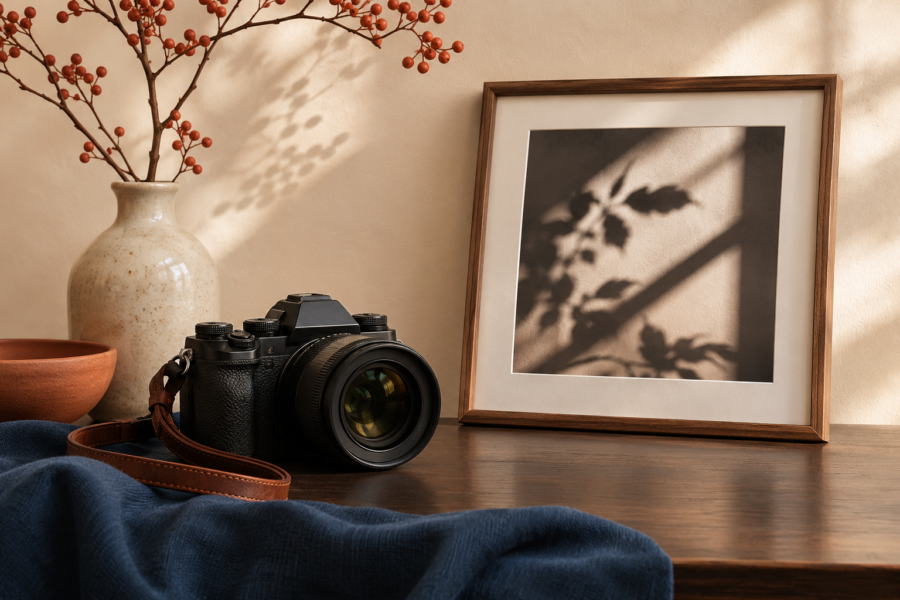
AI illustration of a camera beside a framed shadow photograph

Writing Captions That Add Something to an Image

A caption has limited space, so it helps to decide what it contributes before writing it. Repeating every visible object rarely makes a photograph more interesting. Context, a clear description or an honest account of the creative process can be more useful.

First separate what the image shows from what you know independently. A photograph may show a worktable, while the accompanying note explains why the arrangement was selected. Avoid presenting a guess about the scene as a verified fact.

AI illustration of a camera beside a framed shadow photograph
AI-generated editorial illustration.

Try two versions: one purely descriptive and another focused on a single editorial decision. Read each beside the image. The stronger caption is the one that helps a reader understand the purpose of the picture without overwhelming it.

Illustrations and staged scenes deserve clear labels too. A generated image can accompany an idea without being evidence of an actual place or event. Transparent wording allows the visual and the writing to support each other on honest terms.

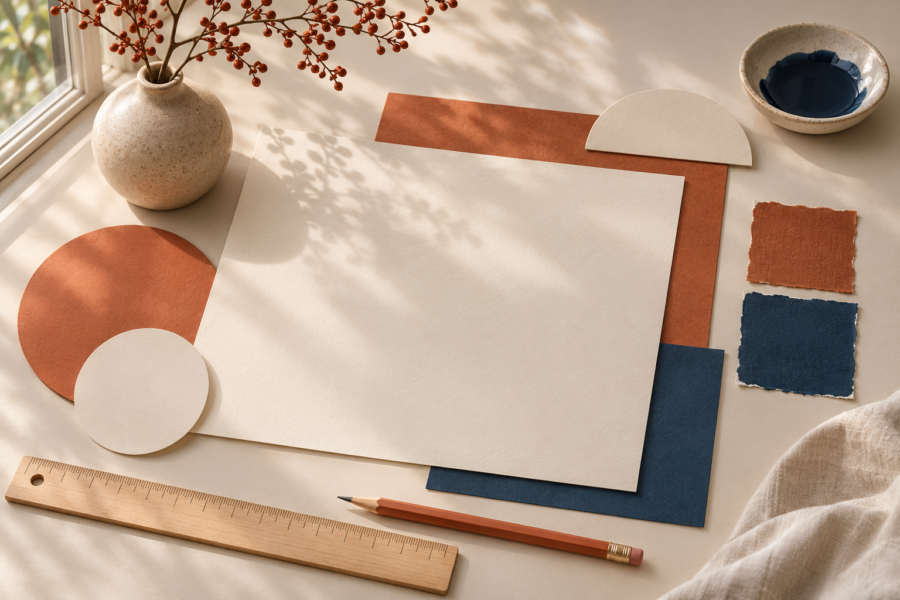
AI illustration of paper shapes and colour swatches on a design desk

Building a Small Colour Study From Everyday Objects

A limited colour study can begin with objects already on a desk. A notebook cover, a ceramic cup and a piece of packaging provide enough material for a modest experiment. Looking closely at familiar things is often more productive than searching for a perfect palette.

Choose three colours and describe their relationship in words before making digital swatches. One might form a calm background, another might carry most of the information, and a third might provide a small point of emphasis.

AI illustration of paper shapes and colour swatches on a design desk
AI-generated editorial illustration.

Test the colours on a simple page with real text. Notice whether the words remain comfortable to read and whether the emphasis falls in the intended place. A pleasing arrangement of swatches is only the beginning of the exercise.

Save the study beside a photograph of the original objects, clearly labelled as your own experiment. Returning to that pair later reveals how an observation became a design choice. The source can stay ordinary while the resulting decisions become more precise.

AI illustration of geometric shadows on a city street

Finding a Visual Theme on an Ordinary Street

A street observation exercise becomes more manageable when it follows one visual theme. Choose colour, repeated shapes or the relationship between doors and windows. A familiar route can provide enough material without requiring an unusual destination.

Walk at an ordinary pace and make brief notes from suitable public viewpoints. Notice patterns before deciding which deserve a photograph. Keeping the theme narrow helps separate a thoughtful sequence from a collection of unrelated attractive details.

AI illustration of geometric shadows on a city street
AI-generated editorial illustration.

Review the observations together after the walk. Look for similarities and exceptions, and describe them without inventing stories about the people behind the buildings. An architectural detail can be interesting on its own terms.

Arrange a small selection with clear captions about what you observed. A personal visual essay does not need to claim that it represents an entire city. Its strength can lie in a precise account of one route and the particular question you brought to it.

AI illustration of a quiet creative workspace

A Creative Brief That Fits on One Page

A short brief gives a small creative project a place to begin. It can describe the intended reader, the purpose of the work and the practical limits without becoming a complicated document. Clarity matters more than an impressive vocabulary.

Start with a sentence explaining what the piece should help someone understand or do. Follow with the material available and the format in which the work will appear. Include a clear note about what is still undecided.

AI illustration of a quiet creative workspace
AI-generated editorial illustration.

Add a small set of questions for review. These might concern readability, tone or the balance between an image and its caption. Specific questions make discussion easier than a general request for opinions about the whole design.

Revisit the brief before calling the project finished. If the work has changed direction, explain the decision rather than quietly ignoring the original purpose. A useful brief remains a shared point of reference throughout the process, even when its first version needs revision.

AI illustration of hand-bound publications with abstract covers

Reading a Magazine as a Sequence of Spreads

A magazine invites a different kind of attention when viewed as a sequence rather than a collection of isolated pages. Open it slowly and notice how one spread prepares the eye for the next. The experience includes pauses as well as prominent images.

Choose a short section and describe its rhythm. A dense page might be followed by a quieter opening, or a repeated heading might provide continuity across changing subjects. Record what you observe without assuming the intention behind every decision.

AI illustration of hand-bound publications with abstract covers
AI-generated editorial illustration.

Make a small diagram using rectangles to represent the spreads. Mark the largest image and the strongest block of text on each. This simplified view can reveal a pattern that is harder to notice while reading individual articles.

Finish by returning to the words. Visual rhythm should support the material rather than distract from it. Your notes can become a thoughtful reading exercise that respects the publication while sharpening your own sense of editorial pacing.

AI illustration of a painted botanical sketchbook and brushes

Turning a Simple Leaf Into a Page of Shapes

An illustration study can begin with a simple observed outline. A leaf provides a familiar starting point, but the exercise is about interpretation rather than botanical identification. A pencil sketch is enough to establish the first version.

Draw the subject several times, changing only one decision in each drawing. Make an edge more angular, simplify the central shape or alter the balance between solid colour and blank paper. Keep the variations together so the differences remain visible.

AI illustration of a painted botanical sketchbook and brushes
AI-generated editorial illustration.

Choose one version and develop a small composition around it. Repetition, overlap and changes in scale can create variety without introducing a completely new subject. Stop occasionally to look at the whole page rather than polishing one isolated detail.

End by noting which change made the biggest difference. This creates a useful record of your visual reasoning. A finished illustration may emerge later, but a page of purposeful variations is already a worthwhile outcome.

AI illustration of a camera beside a framed shadow photograph

Photographing the Same Corner in Three Ways

A familiar room offers a practical subject for a short photographic exercise. Choose one corner and make three distinct compositions without rearranging everything around it. The limit encourages you to work with what is already present.

Begin with a wider frame that explains the setting. Follow with a closer view that emphasises a relationship between two objects. Finish with a detail whose texture or shape first drew your attention.

AI illustration of a camera beside a framed shadow photograph
AI-generated editorial illustration.

Review the pictures together rather than judging each in isolation. Ask which frame gives useful context and which carries the strongest visual idea. If two pictures do the same job, consider whether the set needs both.

Write a sentence about the decision behind each image. These small notes turn a sequence of photographs into a record of choices. The exercise can be repeated in another corner without requiring a new camera, an elaborate location or a dramatic subject.

AI illustration of paper shapes and colour swatches on a design desk

Giving a Page Room to Breathe

A page can feel crowded long before it runs out of space. Several equally strong elements compete for the same glance, leaving a reader unsure where to begin. A useful design exercise is to remove one element before adding another.

Start with a small page containing a heading, an image and a short paragraph. Decide which item deserves the first look. Give that item enough surrounding space to make the choice visible, then arrange the remaining material in a quieter rhythm.

AI illustration of paper shapes and colour swatches on a design desk
AI-generated editorial illustration.

Compare two versions at the size a reader will actually see. A layout that looks balanced when enlarged may feel fussy on a small screen. Read the words as well as inspecting the shapes; the page needs to work as a piece of communication.

Keep a note of what changed and why. The purpose is not to find a universal amount of empty space, but to make a deliberate decision for this particular page. Restraint becomes useful when it gives the content a clearer voice.

Powered by WordPress & Theme by Anders Norén